ESG is becoming the “passport” to global trade.
On July 29th, the Global Reporting Initiative (GRI) officially announced the GRI Sustainable Reporting Standards, which have been refined to suit the conditions of Vietnamese businesses.
This announcement not only helps businesses, especially SMEs, access ESG more easily, but also opens up a common data standard to meet the requirements of multinational corporations, investment funds, and export markets.
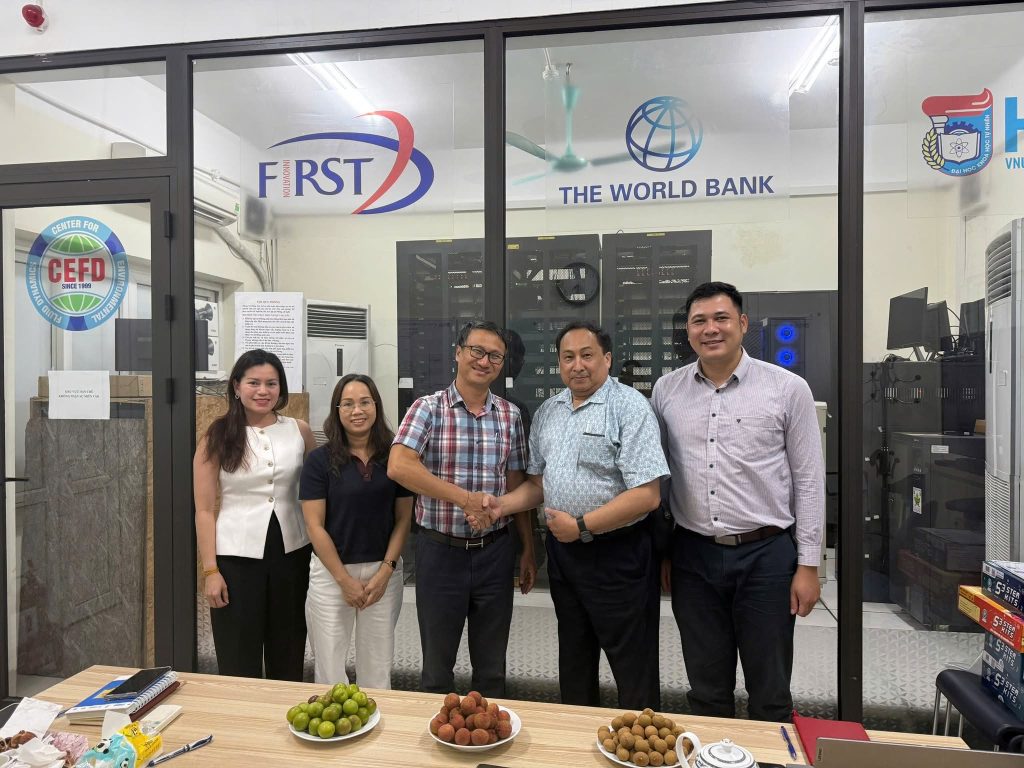
Representatives from the participating organizations signed an agreement to support Vietnamese businesses in preparing sustainable development reports.
In the context of ESG becoming a “common language” and major markets such as the EU, North America, and many multinational corporations continuously raising their environmental, social, and governance (ESG) requirements, this set of standards is seen as a tool to help Vietnamese businesses standardize data according to an international language.
ESG stands for Environmental , Social, and Governance . These are three standards used to measure the sustainability and impact of a business on nature and people.
According to data from the Ministry of Industry and Trade, as of July 15th, Vietnam’s export turnover reached US$290.5 billion, an increase of 21.4% compared to the same period last year. Behind this positive growth is increasing pressure from “green barriers,” as many importers no longer only assess product quality but also require businesses to prove the origin of raw materials, carbon emissions, labor conditions, and management systems.
According to Mr. Tran Cong Minh Bao, GRI Country Director in Vietnam, small and medium-sized enterprises (SMEs) account for approximately 98% of all businesses nationwide, but still face many limitations in terms of financial resources, human resources, and management capacity.
Mr. Nguyen Cong Minh Bao, GRI Country Director in Vietnam, shared information about the implementation process of the GRI standards.
For many years, preparing sustainability reports according to international standards was almost exclusively reserved for listed companies or large corporations with dedicated teams. The majority of SMEs lacked both the data collection systems and the methodology for building these reports.
“This makes it difficult for many businesses, even those with high-quality products, to participate in the supply chains of global brands,” Mr. Bao said.
A “soft roadmap” to ESG data standardization.
Unlike the approach of imposing a rigid set of criteria, the Vietnamese version of the GRI Standards is designed in a tiered manner, allowing businesses to choose a roadmap that suits their size, resources, and level of management maturity. Instead of having to meet all requirements simultaneously from the outset, businesses can gradually build a foundation for sustainable development reporting through core indicators.
In the initial phase, businesses can prioritize measuring electricity and fuel consumption; collecting greenhouse gas emission data; standardizing information on working conditions and welfare policies; and establishing processes for collecting, storing, and managing internal data. These are all fundamental data points for evaluating operational efficiency and meeting the transparency requirements of partners.
Implementing the standardization process in stages allows businesses to systematically accumulate management capabilities, avoiding the pressure of large initial investments. More importantly, this standardization process will create a structured data system, ensuring consistency and verifiability, providing a foundation for businesses to meet auditing, traceability, and ESG assessment requirements, as well as participate more deeply in global supply chains.
According to Werner Bardill, the Swiss Consul General in Ho Chi Minh City, sustainability reporting has become an important criterion in the supplier selection decisions of international corporations.
Mr. Werner Bardill, Consul General of Switzerland in Ho Chi Minh City
“Partners don’t just look at the final product; they evaluate the entire supply chain, from workers’ working conditions and environmental impact to corporate governance capabilities,” Werner Bardill suggested.
From a financial perspective, adopting the GRI standard also helps businesses enhance their credibility with credit institutions and sustainable development investment funds, thereby expanding their access to green capital at a more reasonable cost.
Data standardization is essential for participating in the global market.
At the event, experts and managers all agreed that the process of collecting, digitizing, and sharing ESG data means that businesses must publicly disclose a lot of important information about their supply chain, energy consumption, production processes, human resources, and internal management.
This data is valuable to business operations and could become a target for theft or unauthorized exploitation if not properly protected.
In this context, businesses need to address two requirements simultaneously.
First, data integrity must be ensured. ESG metrics must be collected from reliable, verifiable sources and be available for independent audits. This not only helps limit the risk of “greenwashing” but also protects the company’s reputation with partners and investors.
GRI standardization roadmap (image generated by AI)
Secondly, ensuring information security is crucial. When ESG data is connected to global assessment platforms or shared with partners, businesses need mechanisms for authorization, encryption, access control, and cybersecurity monitoring to prevent the leakage of trade secrets and employees’ personal data.
The GRI’s announcement of the Sustainable Development Reporting Standards for Vietnamese businesses is more than just a reporting tool. It’s a crucial step towards establishing a common data standard, helping Vietnamese businesses speak the same “language” as their international partners.
However, standards are only effective when coupled with data governance capabilities and information security infrastructure. In the digital economy era, businesses compete not only on products or prices, but also on data quality, transparency, and the ability to protect that data.
The GRI standards, once published, serve as an essential institutional and governance “passport.” However, to maximize the effectiveness of this passport, Vietnamese businesses, especially SMEs, need to quickly raise awareness, proactively standardize data, and invest systematically in information security infrastructure, preparing themselves to enter the globalized world in a green and sustainable manner.
Source : tapchianninhmang.vn
- Northann Corp Enters Strategic Relationship with Rexil Group of Companies Netherlands to Promote Sustainable Technology and Products
- Building Sustainable Bridges: Navigating the EU ESG Regulations
- RexVastcom Leadership Visits Bejo’s Da Lat Facility — Toward a Green, Circular Bioeconomy
- ASEAN Business Luncheon: Shaping the Future of Digital Economic Development
- Award ceremony held for the 10th Annual Student Scientific Research Competition
- The 2026 Vietnam SME/Startup ESG Investor Forum: Navigating Trade Shifts, Climate Risks & Investor Demands